
Growth is often painful. To walk away from life with the satisfaction of having given it our best shot, we must first understand what our best looks like.
The wise man Yusuf once told me that one’s best can keep improving, using the example of Olympic long-distance runners. He didn’t elaborate on how. I had to find out on my own, through trial and error.
Yusuf revealed his story only when I offered him chocolate for the first time.
“No, thank you, I hate chocolate.”
As a thirteen-year-old, I couldn’t imagine how anyone could hate chocolate. I was intrigued.
“I grew up on a cocoa farm in Nigeria,” he said. “The smell of it was everywhere. I can still smell it.”
He spoke of the boy who left that farm for university halls in Canada, then moved through the chambers of The World Bank, and subsequently, eventually becoming the Director General of an international development finance institution.
Yusuf was unlike anyone else in the uppoer ranks of international decision-making. His ancestral roots were etched into his face, four lines on each side. He carried them with humility, calmness, and patience. Each word was measured. Every sentance cut to fit.
When he spoke, I listened, turning his words over in my mind, trying to understand what truth he was pointing toward. Truth, I later learned, is rare.
The last time we met was in my thirties, in Abu Dhabi. He was attending a financing meeting. As I handed him a proposal in the car, he closed it abruptly.
It felt out of character. Until:
“I’ll be retiring in a few months,” he said.
After the meeting in Dubai, he wanted to buy a suitcase. We examined two options. He weighed them carefully, considering opportunity cost from every angle. After half an hour, I grew impatient. I couldn’t see how one was so different from the other.
Perhaps the suitcase you choose for your last departure deserves time.
Soon after, he disappeared from public life – and from mine.
I hadn’t thought of Dr. Yusuf for years until I began writing about growth. Not because he was forgotten but because growth, at its most painful, demands commitment to the self.
Nothing in Dr. Yusuf’s way of being suggested power or ambition. He never pursued success. He lived by his own definition of it – and success followed.
One interview that shaped his career took place in his car. He picked up two strangers heading for the airport, to spare them the rain. They were world Bank interviewers, he’d been trying to avoid.
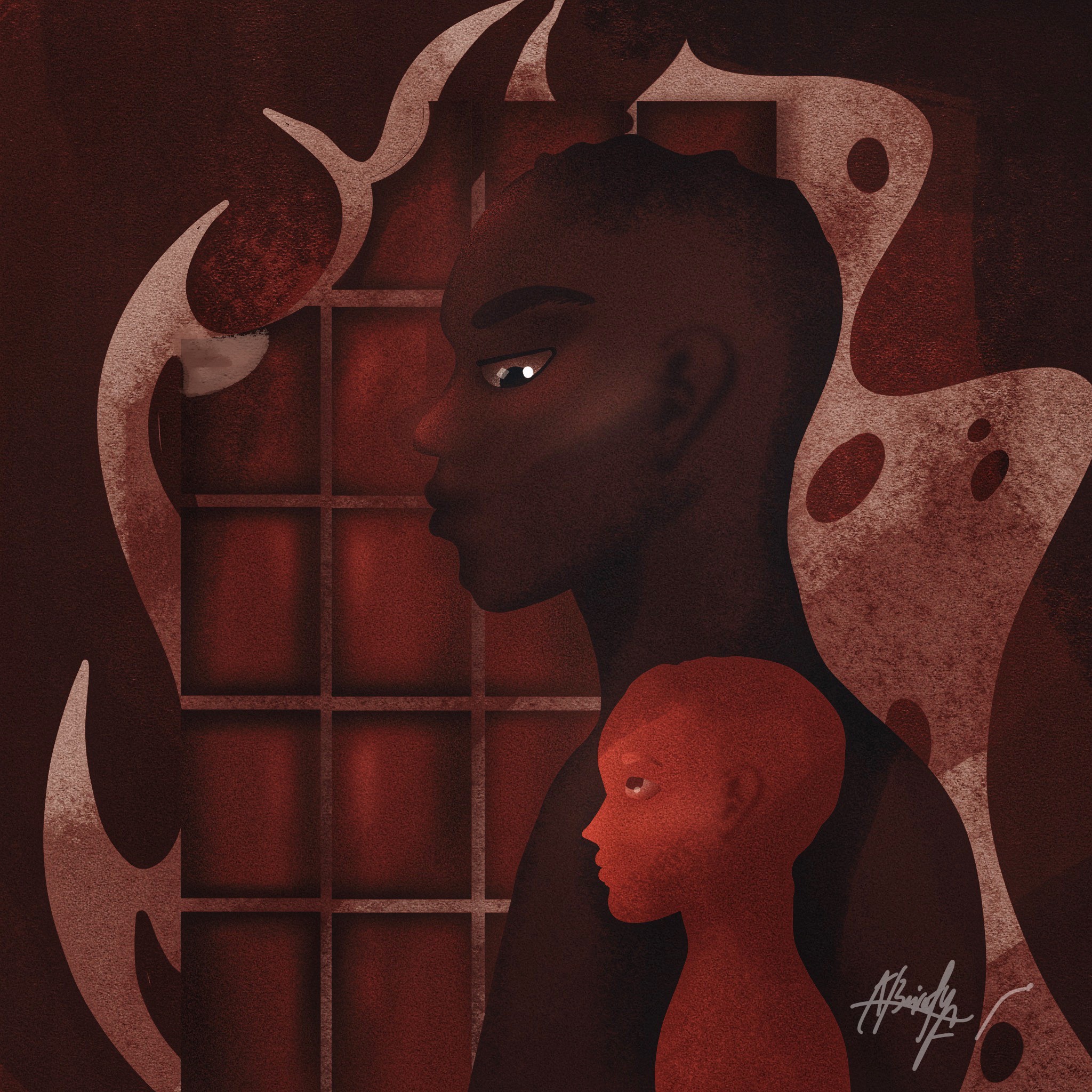
Art for Muriel’s Blog by Iraqi Artist Mariam Beirouty
